AI
Guide
Digital Transformation
Engineering
Stories
Thought Leadership
User Experience
Business Strategy
Enterprise Solutions
Technology Consulting
Share
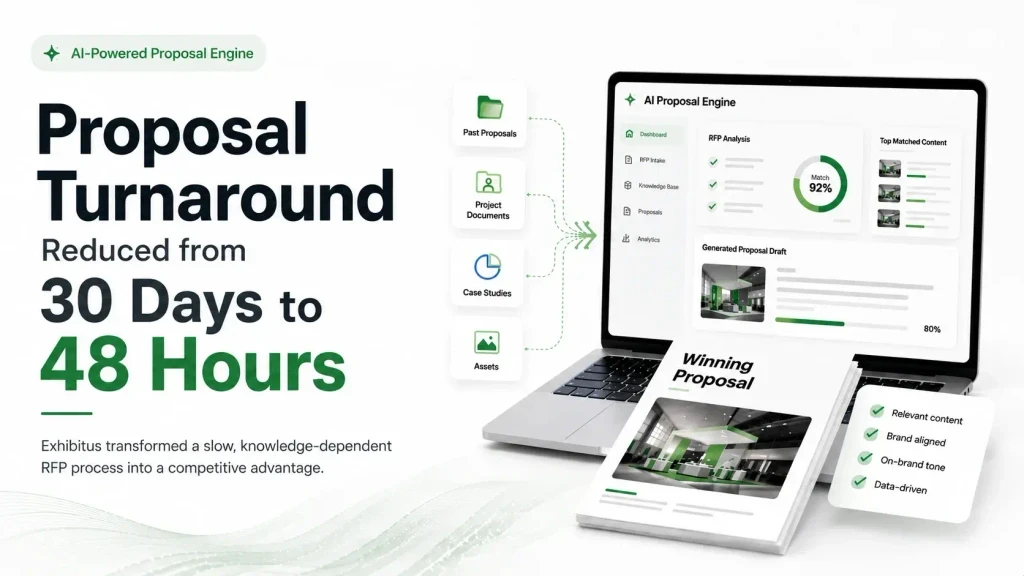
Your Proposals Are Slow Because Your Knowledge Is Trapped
Most companies that struggle with RFPs think they have a process problem. Fix the template. Hire another person. Build a better checklist.
A construction company we worked with had the same assumption, until we sat down and actually looked at what was happening.
This Is for You If...
You’re in a services business where proposals drive revenue.
Every RFP feels like starting from scratch.
Your team is working hard, but the output doesn’t reflect the effort.
The wins are there, but they’re not easy to reuse.
The knowledge is there, but it’s scattered across people, docs, and past proposals.
Proposal creation still depends too much on memory, manual searching, or starting from a blank page.
The Real Problem Wasn't the Proposals
The construction company's team was talented. Their portfolio was strong. They had years of winning proposals, proven case studies, and deep client knowledge. The work to win new business had already been done over years of doing great work.
The problem was they couldn't access it.
Past proposals lived in shared drives. Relevant case studies were buried in job folders. The people who knew where to find things had been there for years, and they were already stretched thin. Every new RFP meant starting a search, not starting a draft.
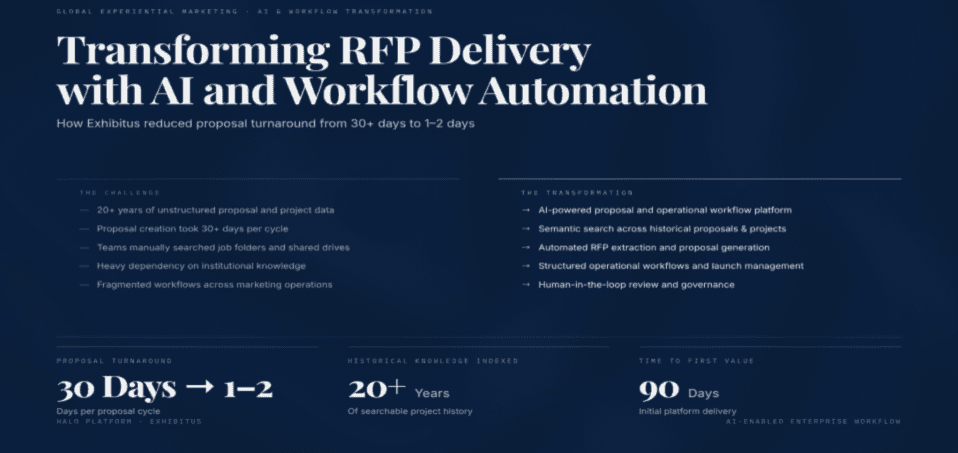
The result: proposals took 30 or more days. Quality varied depending on who was in the room. Marketing capacity was almost entirely consumed by proposal production instead of growth work.
Why This Matters More Than It Looks
For any business where proposals are the primary pipeline driver, a 30-day turnaround is a structural disadvantage.
It limits how many opportunities you can pursue. It increases the cost of every bid. It creates fragility. One person leaving or getting stretched too thin can slow the whole machine down.
The goal here wasn't incremental improvement. It was rebuilding the capability from the ground up.
What We Built
Impekable designed and built an AI-powered proposal engine tailored specifically to how this construction company works.
Turning Unstructured Knowledge Into a Usable Asset
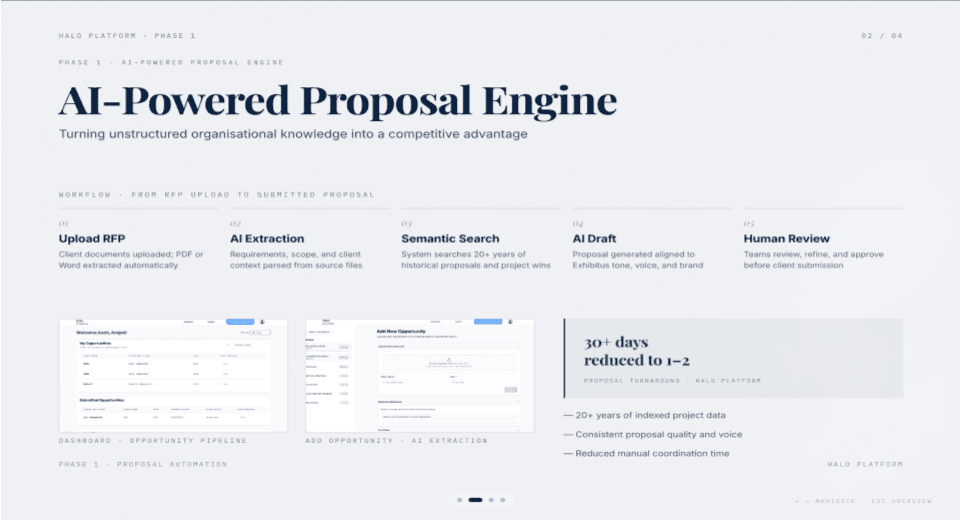
The first step was the hardest to see clearly from the inside: years of high-quality work was locked in unstructured files. We ingested and indexed historical proposals, project documents, and supporting materials, turning fragmented data into a searchable, structured knowledge base.
That foundation is what everything else depends on.
Intelligent RFP Analysis
The system automatically extracts key requirements from incoming RFPs. It identifies relevant signals like industry, scope, and capability match, then connects them to the most relevant historical work. Manual document review is gone. Nothing gets missed because someone didn't have time to search properly.
Brand and Tone Alignment
The engine was trained on the company's previous winning proposals and brand language. Every output is consistent, on-brand, and ready for client-facing use. It doesn't need to be rewritten before it goes out.
Automated Draft Generation
Teams no longer start from a blank page. The platform assembles a strong, structured draft by pulling relevant content from past work, matching case studies to the brief, and surfacing appropriate visuals. The starting point is now 80% of the way there, not zero.
Human-in-the-Loop Quality Control
Speed doesn't mean losing control. Marketing still refines the narrative. Technical teams still validate the inputs. The humans stay in charge of quality. They're just not doing the archaeology anymore.
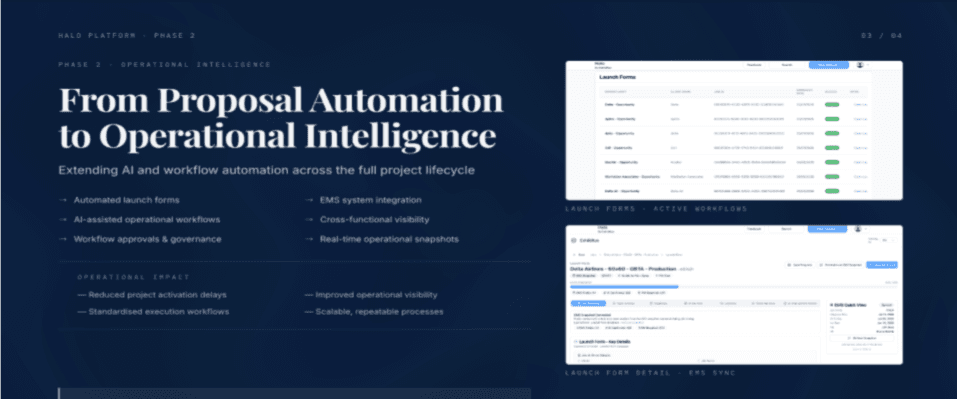
A Look at the Platform
The Outcome
Proposal turnaround went from more than 30 days to just two.
The quality of each response became much more consistent, regardless of who was working on it. The team no longer had to rely on whoever happened to be available or who had the most proposal experience. Messaging stayed aligned with the company’s marketing guidelines, the tone of voice became easier to maintain, and key-person risk dropped significantly.
Marketing also got its time back.
Instead of spending so much capacity on RFP production, the team could redirect that energy toward strategic work, growth initiatives, and higher-value projects.
The real surprise came after the first win. Once the company had its proposal data structured and easy to access, the platform started becoming useful in other parts of the business too, from broader knowledge management to project lifecycle insights and better cross-team collaboration.
That’s the downstream value of getting your data in order. You solve one urgent problem, and suddenly you create the foundation for the next five.
The Underlying Pattern
This is not unique to construction companies.
In any services business where proposals drive revenue, including consulting, agencies, professional services, engineering, and creative work, the same dynamic plays out:
The knowledge to win is already in the business.
It's just not accessible when it's needed.
The people who know where things are become bottlenecks.
Deadlines push teams to produce something, not the best thing.
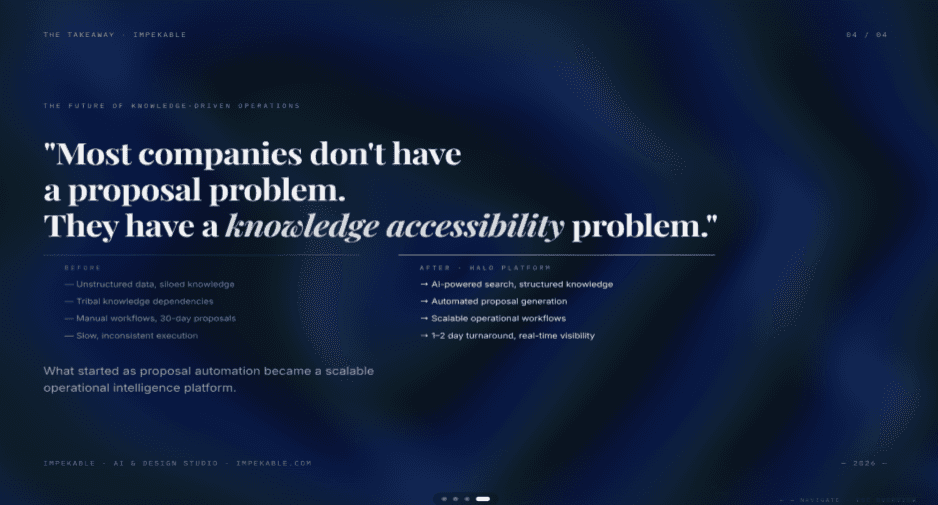
The fix is not a better template. It's making institutional knowledge retrievable and reusable at the moment of need.
How long does it take to implement an AI-powered proposal system?
Does this replace the people writing proposals?
What if our past proposals are inconsistent or low quality?
Is this only useful for large companies?
What does the process look like to get started?
One Thing Worth Taking Away
The knowledge you need to win new business is almost certainly already in your company. It's sitting in old proposals, past decks, and the heads of people who've been there the longest.
The question is whether your team can get to it in time to matter.
If your proposals are slower than they should be, or if quality varies based on who happens to be available, that's not a talent problem. It's a retrieval problem. And that's something we know how to fix.
Reach out if you want to talk through what this could look like for your team.